Skigebied Ertsgebergte
Erzgebirge in Germany is a wide-ranging winter-sports destination with around 155 km of pistes and roughly 105 lifts spread across the Saxon highlands. It offers a relaxed, affordable alternative to the Alps, with 5 accommodation options on Nivosola starting from EUR 517 per person. The area is ideal for families, beginners and intermediates who want easy access, gentle terrain and a friendly local atmosphere.
Accommodations in Ertsgebergte
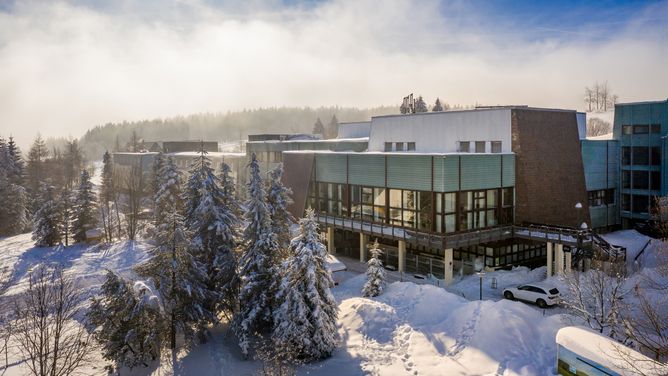 Altenberg6.6
Ertsgebergte, Duitsland
AHORN Waldhotel Altenberg
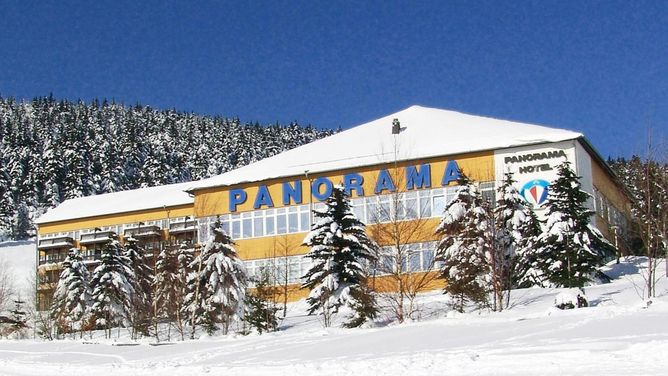 Oberwiesenthal8.0
Ertsgebergte, Duitsland
PANORAMA Hotel Oberwiesenthal
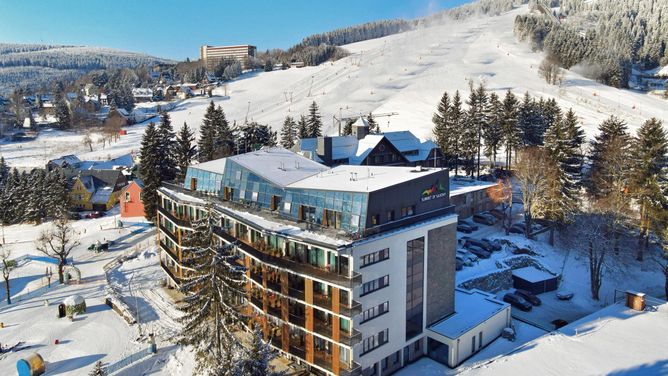 Oberwiesenthal9.0
Ertsgebergte, Duitsland
Summit of Saxony Resort Oberwiesenthal
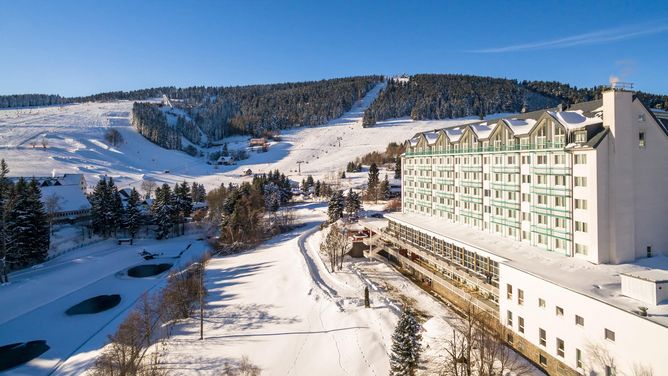 Oberwiesenthal8.0
Ertsgebergte, Duitsland
Best Western Ahorn Hotel Oberwiesenthal
 Oberwiesenthal7.0
Ertsgebergte, Duitsland
AHORN Hotel Am Fichtelberg
Snow report & 7-day forecast
Loading forecast...
Who Is Erzgebirge For?
Erzgebirge is a strong match for beginners and intermediate skiers who want wide, forgiving slopes without the intimidation of steep Alpine terrain. Families benefit from the gentle gradients, short lift queues and the manageable scale of the area, while budget-conscious groups will appreciate the lower price point compared to Austria or Switzerland.
Advanced skiers can still find enjoyment here, particularly when snow conditions are good, but those chasing long black runs or serious off-piste terrain will likely outgrow Erzgebirge quickly. Think of it as a relaxed, community-focused ski region rather than a high-performance destination.
Slopes and Lifts
The area offers around 155 km of marked pistes serviced by approximately 105 lifts of varying types. The lift fleet is dominated by drag lifts and platters, with 34 drag lifts, 34 platters and 7 T-bars making up the bulk of the network. There are also 8 chairlifts, 1 cable car, 12 magic carpets ideal for beginners and children, and a handful of rope tows and J-bars.
The high proportion of surface lifts reflects the low-to-moderate terrain profile of the Erzgebirge mountains. Beginners will find the magic carpets and gentle button lifts very approachable, and the single cable car provides a convenient overview of the area at its highest point.
Snow Reliability
Snow reliability in Erzgebirge is modest by European ski-resort standards. Looking at historical maximum snow depths, the best recent season was 2020/21 with a peak of 57 cm, followed by 33 cm in 2023/24, 29 cm in 2021/22, 25 cm in 2022/23, and just 15 cm in 2024/25. These figures show significant year-to-year variation and generally shallow base depths.
Travellers should plan accordingly. Choosing to visit in January or February gives the best statistical chance of catching natural snow, and it is worth checking live snow reports before booking. Many resorts in the area use snowmaking to supplement natural cover, which helps maintain piste quality during lean seasons.
Apres-Ski and Atmosphere
Erzgebirge has a warm, unpretentious apres-ski culture rooted in local Saxon tradition. Expect cosy mountain huts, hearty food, regional beers and a friendly crowd made up largely of German families and domestic weekenders rather than international party groups.
The atmosphere is convivial and low-key, which suits those who prefer a relaxed end to a ski day over loud nightlife. Local specialities like Erzgebirge cuisine and traditional crafts give the region a distinctive character that sets it apart from more commercialised ski destinations.
Getting There and Practical Tips
Erzgebirge sits in the German state of Saxony, close to the Czech border, making it easily reachable by car from cities like Dresden, Leipzig and Chemnitz, all within roughly one to two hours. Travellers from further afield can fly into Dresden or Leipzig/Halle airports and hire a car for the final leg.
With 5 accommodation options listed on Nivosola from EUR 517 per person, the area offers a compact but practical selection of places to stay. Book early for the best availability during school holiday weeks, as the region is popular with German domestic visitors. Ski hire is widely available locally, and lift passes are generally priced below Alpine equivalents.
Best Time to Go
January and February are the optimal months to visit Erzgebirge for the best combination of cold temperatures and natural snowfall. Historical snow data shows that peak depths in recent years have typically been recorded during these midwinter months, though the overall base has been shallow in several recent seasons.
Early December can be hit or miss, and March carries the risk of warm spells reducing snow cover significantly, as the 2024/25 maximum of only 15 cm illustrates. If flexibility allows, waiting for a confirmed good snow window rather than booking far in advance is a sensible approach for this region.
Snow depth by winter
Snow reliability: Variable (16/100), based on altitude and historical snow depth.
Maximum snow depth (cm) per winter season. Source: Open-Meteo (ERA5).
Ertsgebergte on the map
Lifts and pistes based on OpenStreetMap.

FAQ about Ertsgebergte
How many km of pistes does Ertsgebergte have?
Ertsgebergte has approximately 155 km of marked downhill pistes (source: OpenStreetMap).
How many lifts are there in Ertsgebergte?
Ertsgebergte is served by around 105 ski lifts.
What does a ski holiday to Ertsgebergte cost?
Accommodations in Ertsgebergte start from around €517 per person; Nivosola compares 5 options, refreshed daily.
Is there enough snow in Ertsgebergte?
Yes. Recent winters reached a maximum snow depth of around 57 cm. December to March is the most reliable period.
How many kilometres of pistes does Erzgebirge have?
Erzgebirge has around 155 km of marked pistes in total, serviced by approximately 105 lifts of various types including chairlifts, drag lifts, platters and magic carpets.
Is Erzgebirge suitable for complete beginners?
Yes, Erzgebirge is well suited to beginners. The area has 12 magic carpets and numerous gentle surface lifts that make learning to ski straightforward and stress-free, and the overall terrain is forgiving rather than steep.
How reliable is the snow in Erzgebirge?
Snow reliability is variable. Maximum snow depths over the past five winters have ranged from just 15 cm in 2024/25 to a high of 57 cm in 2020/21. Visiting in January or February and checking live snow reports before travel is strongly recommended.